
Galapagos Islands Travel Guide 2026: Why-What-Where-When to go

By Jonatan Chimarro ·
👋 Hello, I'm Jonatan
I'm a passionate tour guide in Ecuador and author of these blogs. I have lived and worked in all regions of Ecuador: Galapagos Islands, Amazon Rainforest, Andes Mountains and the coast. Quito is my birthplace. With over 10 years of work experience in tourism you can see me as your local expert. (Full bio at the end.)
This Galapagos Islands travel guide is for anyone planning a tour. It is mainly for those traveling for the first time, but also if it is your third time. I write about Galapagos from what I see with my own eyes. I like to use infographics to make all the important information easy to understand. If you need more information, you are always welcome to contact me. There is also a comment section at the end of this blog in case of questions and suggestions.
⏱️ Galapagos in 1 minute
The Galapagos is a volcanic archipelago ~620 miles / ~1,000 km west of Ecuador, home to wildlife found nowhere else on Earth. This unique wildlife has no fear of people, so you can easily approach them. The islands are almost entirely a national park. You can only reach them by plane from places like Quito or Guayaquil. Island-hopping (staying in hotels) and cruises are the two ways to visit the islands of Galapagos. Here is the whole trip in five lines:
- Why go: Unique wildlife can be seen only in Galapagos. See animals up close. Encounter Galapagos animals like sea lions, giant tortoises, marine iguanas, boobies and penguins. Galapagos is a one-of-a-kind environment and UNESCO certified heritage. It is the location where Darwin's theory of evolution comes from.
- What to do: Popular tourist activities on the Galapagos are snorkeling, diving, naturalist wildlife walks, kayaking and boat tours. Tourist activities happen on land and in the water.
- When to go: You can go any time of the year. The warm season (December–May) brings calmer and warmer seas. The cool "garua" season (June–November) is cooler and richer for wildlife.
- Where to base: Base yourself on Santa Cruz. It sits in the middle of the archipelago, has the most hotels and day trips, and is the island nearly every trip sails out from. You can also sleep on San Cristobal (the capital), Isabela (the largest) or tiny Floreana, but you will find fewer boats and beds. Every other island is a day trip by boat — or you see them from a cruise.
- What it costs: daily costs can vary a lot depending on your budget. Land-based island hopping costs USD 150–300 a day. Island exploration by cruise costs USD 350–1,000+ a day. A USD 200 national-park fee and a USD 20 Transit Control Card are on top.
1. Why travel to the Galapagos Islands?
The Galapagos Islands are a UNESCO World Heritage Site and almost entirely national park. They are home to wildlife found nowhere else on the planet. Roughly 80% of the land birds and every reptile live only on these islands. And because these animals grew up with almost no predators, they let tourists come up close. A sea lion will swim beside you. A giant tortoise can be seen within arm's reach. The islands of Galapagos sit on the equator, ~620 miles / ~1,000 km off the coast of Ecuador.
People come to Galapagos to see wildlife. You do not watch the wildlife here, you share the beach, the ocean and the islands with them.
— Jonatan Chimarro, Ecuador Travel Expert
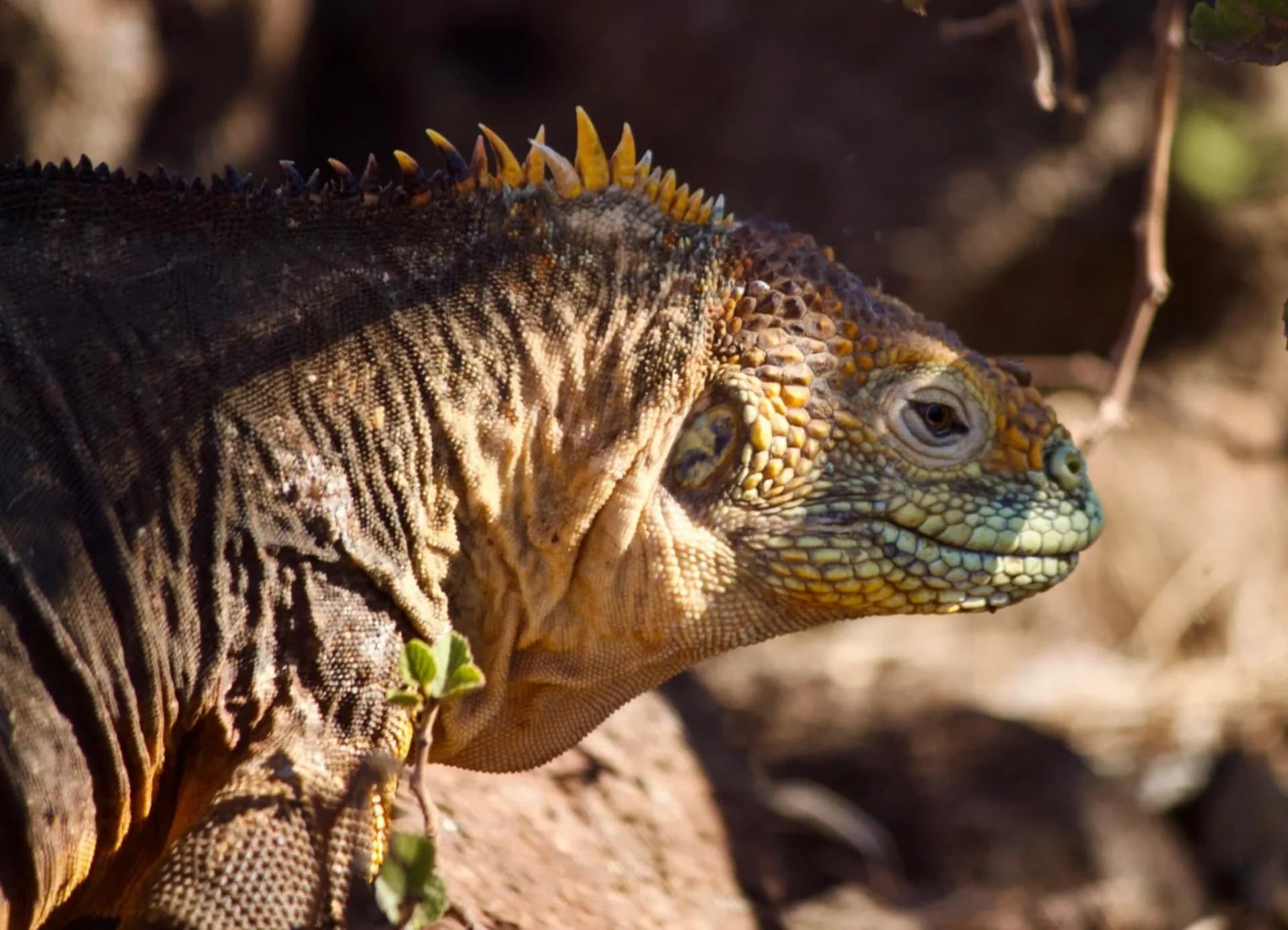
The Galapagos Islands are filled with unique flora and fauna. Biodiversity is the main reason most people visit the Galapagos. Much of the wildlife only lives in this region. Around 80% of the land birds and all the reptiles here aren't found anywhere else in the world. On top of biodiversity, the behavior of the animals is also unique. Marine iguanas graze on algae in the water. Galapagos has the only penguin that lives north of the equator and nests on bare lava. Giant tortoises walk through the highlands. You watch sea turtles glide through the water and sea lions relax on the beach. Wildlife can be seen up close. For most travelers, this unique wildlife experience is the highlight of a Galapagos trip.
The Galapagos Islands rose straight out of the sea as volcanoes, far from any mainland. The animals that reached them (by air, by current, by sheer luck) arrived in a world with almost no large predators, so they never learned to fear anything. That is why a sea lion pup will inspect your snorkel mask, and a turtle will swim past, undisturbed.
There is a lesson in it too. This is where Charles Darwin studied the wildlife in 1835, and what he saw helped shape his theory of evolution. A trip here is a living classroom — the finches, tortoises and iguanas that taught the world how life adapts are right in front of you. You can see that science continue today at the Charles Darwin Research Station on Santa Cruz.
The Galapagos Islands have been a UNESCO World Heritage Site since 1978. Approximately 97% of the land area is national park. You will visit a protected conservation project, not a resort. The nutrient-rich currents around the islands contribute to their biodiversity. This is home to some of the world's finest snorkeling and diving. You swim alongside sea lions, sea turtles, rays and reef sharks up close to the beach.
2. What are the Galapagos Islands?
This section explains to you what the Galapagos Islands are. It gives you an overview to better understand the bigger picture when we talk about the Galapagos, also called the Archipelago.
There are 13 main islands. Only 4 are inhabited: Santa Cruz (the central hub), San Cristobal (the capital), Isabela (the largest), and tiny Floreana. Santa Cruz and San Cristobal are reached by plane. Isabela and Floreana are reached by boat from Santa Cruz or San Cristobal. The other 9 main islands are uninhabited — you visit them by boat, but nobody lives there. Beyond those 13 lie 6 smaller islands and over 100 islets, none of them inhabited either. Santa Cruz is the most popular island when booking a hotel.
Based upon my customer demand and tour guide experience, I see the places that matter most for visitors to be Santa Cruz, Bartolome, Seymour, Plazas, Santa Fe, Isabela, Tintoreras, Pinzon and Daphne. All nine are underlined on the map. Eight of them are islands; the ninth, Tintoreras, is an islet — a lava outcrop off Puerto Villamil on Isabela's south-east coast, but one of the best snorkeling trips in the archipelago.
3. What are popular travel locations in the Galapagos?
Most first-time visitors visualize a single island or close ranged island group, but a Galapagos trip is really a string of visitor sites scattered across the archipelago. Most tourist spots you reach by boat for the day. The infographic below helps you with an overview of where the most popular tourist sites are within the Galapagos.
What each spot is known for
Here are my reasons why each of the 34 spots on the map are worth visiting. The numbers below relate to the numbers in the infographic.
Fernandina
- 1. Punta Espinoza is the only and best tourist spot on the island. It is filled with wildlife. See marine iguanas, flightless cormorants, penguins and sea lions.
Isabela
- 2. Sierra Negra volcano is one of the world's largest active volcanoes with a crater roughly 6 mi / 10 km across. You can reach the rim following a highland hike. You can see volcanic vent holes called fumaroles in the ground. The environment is filled with vast black lava fields.
- 3. Wall of Tears has a grim stone wall built by a colony of prisoners who were forced to move here in the 1940s–50s. The quiet road to this place passes lagoons and lookout points. You can also encounter tortoises.
- 4. Concha de Perla is a sheltered lagoon by Puerto Villamil reached along a boardwalk. It is ideal for snorkeling with sea lions, turtles, rays and penguins.
- 5. Arnaldo Tupiza tortoise center is Isabela's giant-tortoise breeding center. Here are the distinct tortoise races of the island being raised.
- 6. Urbina Bay is a coast strip uplifted by a 1954 eruption. Here you can see unusually large land iguanas and giant tortoises. Offshore offers good places for snorkeling.
- 7. Elizabeth Bay offers a boat-only site. Explore red-mangrove lagoons by panga. Enjoy encounters with penguins, turtles, rays and sea lions.
- 8. Punta Moreno is a lava covered environment with pools where flamingos and other water birds gather.
Tintoreras (islet)
- 9. Reef-shark channels has lava islets. Here you can see the white-tipped reef sharks that rest in the calm channels, with penguins and marine iguanas. It is an excellent place for snorkeling.
Santiago
- 10. Puerto Egas is a black-sand beach and eroded lava coast. The small caves and tide pools are home to seals and marine iguanas.
- 11. Buccaneer Cove is a cliff-lined bay. Arr matey! This bay was a favorite anchorage point of pirates and whalers in the 1600s and 1700s.
- 12. Espumilla Beach is a golden turtle-nesting beach. The mangroves and lagoon behind the beach are sometimes visited by flamingos.
Bartolome
- 13. Pinnacle Rock & summit has the most iconic view in the Galapagos Islands. A boardwalk trail lets you climb to the summit. Here you see the famous spire and twin bays. The sea below hosts a diversity of marine wildlife.
Mosquera (islet)
- 14. Sandbar & sea lions is a low sandy islet between Baltra and North Seymour with one of the archipelago's largest sea lion colonies and plenty of shorebirds.
North Seymour
- 15. Seabird trail is a flat loop through the islands' finest seabird colonies. Here birds with blue feet and birds with inflatable red pouches nest and relax right beside the path.
Santa Cruz
- 16. Charles Darwin Research Station is the best-known science and conservation center in the islands. It has a giant-tortoise breeding program. Easily reached from Puerto Ayora.
- 17. Tortuga Bay is a long white-sand beach. It is a short walk from Puerto Ayora. There is also a sheltered cove for swimming. See marine iguanas and reef sharks while paddleboarding.
- 18. Los Gemelos (Twin Craters) are 2 large sinkholes in the highlands. Around these craters grows Scalesia forest. Here you can spot the vermilion flycatcher.
- 19. El Chato tortoise reserve is located in the highlands. Here wild giant tortoises roam freely. The easiest place to see them in numbers.
- 20. Cerro Dragon means "Dragon Hill" and has a trail past a flamingo lagoon to a land-iguana nesting area. Enjoy views over the bay while walking the trail.
- 21. Las Bachas is a soft white-sand beach on the north shore. There is also a flamingo lagoon which is popular for swimming and snorkeling.
- 22. Puerto Ayora is the main town and tourist hub of the islands. Here are the most hotels, restaurants, dive shops and day-trip departures.
Floreana
- 23. Post Office Bay is a centuries-old wooden mail barrel. Here visitors still leave postcards that need to be hand-carried home. This tradition was begun by whalers in the 1790s.
- 24. Cormorant Point is an olivine-tinted green beach and a flamingo lagoon. There is also a separate white-sand beach nearby where turtles nest.
South Plaza
- 25. Land-iguana trail is a tiny island covered in red Sesuvium. It is home to yellow land iguanas, a colony of sea lions who live on the cliff-edge and swallow-tailed gulls.
Santa Fe
- 26. Barrington (turquoise) Bay is a sheltered turquoise cove for snorkeling. Here sea lions and rays can be seen. A short trail leads to the endemic Santa Fe land iguana next to the giant Opuntia cactus.
Genovesa
- 27. Prince Philip's Steps is a steep cliff stairway onto the "bird island" plateau. The plateau is alive with red-footed and Nazca boobies. You can also spot storm petrels and short-eared owls.
Espanola
- 28. Gardner Bay is a long white-sand beach with a large sea lion colony. The calm water is great for snorkeling. Here you swim among reef fish and turtles.
- 29. Punta Suarez is a rugged trail past marine iguanas and a blowhole. It leads to the world's only breeding colony of the waved albatross. The albatross nest here from about April to December.
San Cristobal
- 30. Interpretation Center is a well-designed museum in Puerto Baquerizo Moreno. It covers the islands' natural and human history. Nearby trails lead to Tijeretas.
- 31. Kicker Rock (Leon Dormido) is a towering pair of sea cliffs. They rise sheer from the ocean. It is a premier snorkel and dive site for sharks, rays and turtles.
- 32. Punta Pitt is the one spot where all three Galapagos booby species nest together. You reach it by a steep trail up a tuff cone.
- 33. Isla Lobos is a small islet and channel. It is a nursery for playful sea lions. Blue-footed boobies and frigatebirds also nest here.
- 34. La Galapaguera tortoise center is San Cristobal's tortoise reserve and breeding center. It protects the island's own endemic giant tortoise.
The locations mentioned above are popular spots for tourists. The Galapagos offers, of course, more locations, but less known or traveled to.
4. What are popular tourist activities in the Galapagos?
Most visitors come for the wildlife. Many also come for the history of Charles Darwin. But the best island for you also depends on the activities you want. The infographic below shows the main activities per island, including the islets.
- Snorkeling is best at Las Tintoreras and the Lava Tunnels on Isabela. Also try Kicker Rock on San Cristobal. Off Floreana you can snorkel a sunken volcano crater.
- Scuba diving is best with day dives at Gordon Rocks from Santa Cruz and Kicker Rock from San Cristobal. There are more dive sites off Isabela and Floreana. South of Pinzon, No Name Rock draws hammerhead and Galapagos sharks. Serious divers take a liveaboard to Wolf and Darwin in the far north.
- Wildlife walks are led by naturalists on every island you land on. You see boobies, iguanas, tortoises and sea lions at arm's length.
- Kayak & paddleboard trips are best in calm bays like Tortuga Bay on Santa Cruz, Tijeretas on San Cristobal and Concha de Perla on Isabela. The water off Floreana is quiet too.
- Surfing is best on San Cristobal, which has the top breaks in the islands. You find more around Santa Cruz and Isabela.
- Biking is best in the Santa Cruz highlands and on the long Wall of Tears road on Isabela. You can rent a bike on San Cristobal and Floreana too.
- Bay & panga tours are gentle boat rides to coves and islets. They are the easiest way to see wildlife without snorkeling.
- Darwin Research Station is the land-based highlight. The Charles Darwin Research Station sits near Puerto Ayora on Santa Cruz. It is the islands' best-known science and conservation stop. Its Fausto Llerena giant-tortoise breeding center lets you see the conservation work up close.
- Tortoise centers are open to visitors on Santa Cruz (Fausto Llerena, at the Darwin Station), Isabela (Arnaldo Tupiza) and San Cristobal (La Galapaguera). Meet the tortoises up close.
Two islands are the exception, as the infographic above shows. At Pinzon you snorkel and dive straight from the boat, and Daphne Major you simply sail past. Nobody lands on either.
5. What wildlife will you see on each island?
You will see giant tortoises, marine iguanas, sea lions, blue-footed boobies and many more. Most of the wildlife can be seen within a couple of meters of you. About 80% of the land birds and all the reptiles are found nowhere else on Earth. The wildlife is calm because it has no reason not to be. The table below shows what wildlife can be seen where. It includes Tintoreras, the islet off Isabela, because that short boat trip is where many of my travelers get their closest look at reef sharks, penguins and marine iguanas. When a dot is not visible it doesn't mean wildlife doesn't live there. Dots indicate common locations of wildlife to be seen.
The first time a sea lion pup swims up to your mask, you forget the camera in your hand. Be amazed with close encounters.
— Jonatan Chimarro, Ecuador Travel Expert
This is what people come for. And the Galapagos delivers. After years of guiding here, it still surprises me.
The headline is endemism. The islands are so isolated that life evolved on its own path. Think of the giant tortoise, the marine iguana and the flightless cormorant. These are not rare versions of animals you know. They are their own thing.
The second surprise is how close it all is. You do not need a long lens. A sea lion will share your patch of beach. A booby with blue feet will dance two meters from the trail. While snorkeling, you may meet a sea turtle or a penguin eye to eye.
Underwater is its own world. Expect rays, reef sharks and turtles. In the right spots you find schools of hammerheads. Even a gentle bay snorkel near the inhabited islands is full of life.
The wildlife comes to you. So the skill is not finding it. It is about behaving well around it.
— Jonatan Chimarro, Ecuador Travel Expert
6. Which Galapagos island is best for you?
13 main islands, 6 smaller islands and 100+ islets create the question of which island you should visit. I hear spotting wildlife is the main reason tourists visit the Galapagos Islands. Charles Darwin is also an important reason from an historical point of view. Other factors at play are the type of activities you prefer, the number of days you like to go and your budget. To help you decide which island or islands you like to visit, I have created a 5-step decision plan. This helps you choose your preferred island(s) and create your trip. How you travel between them, by cruise or island-hopping, comes later, in Section 10.
In plain words, here is the order I walk every traveler through:
- Wildlife is where you start. A single animal can decide it. Penguins mean Isabela. The waved albatross (April to December) means Espanola. Easy sea lions mean San Cristobal. A few top wildlife islands are cruise only. Those are Espanola, Genovesa and Fernandina. More on that below.
- Activities come next. Decide what you want to do. Diving and snorkeling are possible almost everywhere. Surfing is best on San Cristobal. Hiking and biking are best on Isabela.
- Budget matters too. Land based island hopping runs USD 150 to 300 per person per day. Cruises run USD 350 to over 1,000 a day. Add the fixed park fee (about USD 200), the Transit Control Card (about USD 20) and mainland flights (about USD 300 to 500). Divide your budget by the average daily spend. That tells you how many days you can afford.
- Trip length sets the pace. It decides how many islands you can see. On average you see one island a day. Only the last day has no new island, for practical reasons. Some people also just want to relax at the beach or hotel. You do not have to schedule a new island every day.
- Your island(s) come last. Put the previous steps together. See how many islands you can visit. Pick the islands with your wildlife and activities. Then book a tour or cruise that includes them.
7. When is the best time to visit the Galapagos?
There is no bad time to visit the Galapagos. The warm season, December–May, brings sunnier skies, calmer seas and warmer water. The ideal period for snorkelers. The cool "garua" season, June–November, is cooler and mistier, with richer, choppier seas and very active wildlife. Something is always happening; the question is which trade-off suits you.
People worry a lot about timing the Galapagos. They should worry less. There is genuinely no bad season.
The year splits in two. The warm season runs December to May. Skies are sunnier. The sea is calmer. The water is warmer. These are the easiest conditions for snorkeling. They are also the gentlest for anyone who fears seasickness. Short warm showers come and go.
The cool season runs June to November. Locals call it the garua. That is the low gray mist that often hangs over the islands. The air is cooler and the sea is choppier. The water is also colder and richer in nutrients. So the wildlife is busy and feeding. Divers and serious wildlife watchers often choose these months on purpose.
Wildlife happens all year. Different animals court, nest and hatch in different months. For example, the waved albatross is on Espanola from roughly April to December. If one species is your dream, plan around it. Otherwise, travel when it suits your life.
8. What are the costs for a Galapagos trip?
The Galapagos is not a budget destination, but the range is wide. As a planning guide, land-based island-hopping runs roughly USD 150–300 a day, cruises from about USD 350 to over USD 1,000 a day by tier. On top of the daily rate you pay the park fee, the Transit Control Card, and flights from the mainland.
Let me be honest about money, because this is the part that surprises people.
In short, budget roughly USD 150 to 300 a day for land based island hopping. Budget USD 350 to 1,000+ a day for a cruise. Add a one off USD 200 park fee and a USD 20 Transit Control Card.
The Galapagos is expensive. Most things are shipped or flown in. The strict visitor system also limits numbers. But the range is wide. As a planning guide, not a quote, land based island hopping runs roughly USD 150 to 300 per person per day. Cruises start near USD 350 a day for tourist class. They climb past USD 1,000 a day at the luxury end. A dive liveaboard sits in between.
Then there are the fixed costs that everyone pays, on top of the daily rate. The national park entrance fee is around USD 200 for a foreign adult. The Transit Control Card is about USD 20. And the return flight from Quito or Guayaquil typically runs a few hundred dollars. Build all three into your budget from the start. Bring extra cash on hand for daily practical needs.
The good news is simple. There is a real Galapagos trip at most budgets. Based on your personal preferences, choose between land hopping and a cruise tour.
9. Examples of Galapagos tours
Here are three of our own trips. Each one is based on Santa Cruz in Puerto Ayora and reaches its other islands by boat. Generally, the longer the trip, the more islands you add. You can also choose a free day to relax on Santa Cruz without any obligation for scheduled activities.
All three tours run in groups of 16 travelers at most and include the airport taxi both ways: the Three Islands Tour (5 days), the Four Islands Tour (8 days) and the Five Islands Tour (10 days). Prices are the current from-rates on the tour pages and exclude the park fee, the Transit Control Card and your mainland flights. Browse all Galapagos Islands tours for the full range.
10. Cruise or island-hopping, which is right for you?
This is the choice that lays the foundation for your whole trip. A cruise means you sleep on the boat and wake at a new island. It reaches the most wildlife in a fixed time. Land-based island-hopping means hotels in port towns combined with day boat trips. It is cheaper, slower and more flexible. Neither is "better." Each offers a different style of traveling.
Which is better, a Galapagos cruise or land stay? It depends! A cruise reaches more; island-hopping lets you take more control of the day.
— Jonatan Chimarro, Ecuador Travel Expert
Almost every traveler asks me the same question: cruise, or stay on land? Here is how I help guests decide.
A cruise is the classic Galapagos trip. You board a yacht and it becomes your hotel. These yachts generally have a 16-passenger capacity. It sails at night, so you wake up at a new island each morning. A naturalist guide leads two visits a day. The big advantage is reach: a cruise can take you to far islands like Genovesa or Fernandina that no day trip can. The trade-off is cost, a fixed schedule, and being at sea.
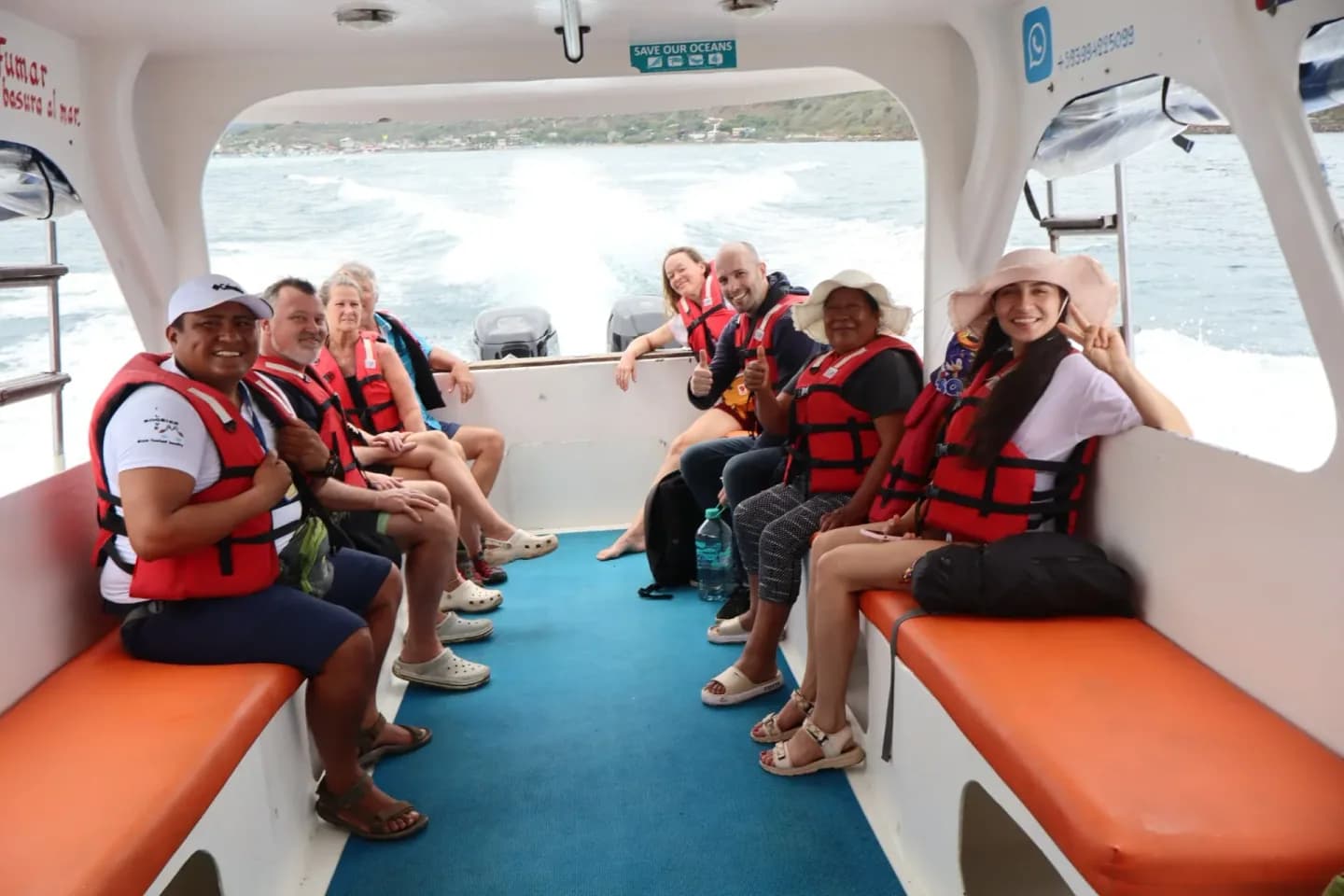
Land-based island-hopping is the newer way. You stay in hotels in the port towns of Santa Cruz, San Cristobal and Isabela, and take day boats to nearby visitor sites. It costs less, you sleep on solid ground, and you can build in slow mornings and free time. The trade-off is that you cannot reach the remote islands, and you spend some hours each day in transit.
11. About the Galapagos: landscapes
You feel the Galapagos underneath your feet. One morning you cross black lava that cooled a lifetime ago. The next morning you climb into green highlands that are wrapped in mist. Every island here is the summit of a volcano. The land tells you how young or old the island is.
Born from a hotspot. The islands sit over a volcanic hotspot in the Earth's crust. As the Nazca plate drifts slowly east, each island is carried off the hotspot while a new one builds behind it. That is why the western islands, Isabela and Fernandina, are the youngest and still erupting, while eastern islands like San Cristobal and Espanola are older, lower and worn down.
The coast. At sea level you find white-, black- and even green- and red-sand beaches, mangrove lagoons and tidal pools. Here sea lions relax and marine iguanas warm themselves on the rocks.
The arid zone. Just inland, most islands are dry and low. Vegetation consists mostly of leafless Palo Santo trees and cactus forest. The ground is filled with old lava flows. For much of the year it looks almost like dry desert.
The highlands. On the larger islands the land rises high enough to catch the garua mist. Vegetation turns green. The Scalesia forest is present. Ferns, open pampa, and muddy pools fill the environment. This is where the giant tortoises can be seen. Just an hour from the coast, but a completely different environment.
The volcanoes. The high points are volcano summits with craters inside. Isabela alone is built from six volcanoes. One of these volcanoes, Sierra Negra, holds one of the largest active craters on Earth. Fernandina is the youngest and most pristine island of all. Several volcanoes stay active. These volcanoes are monitored closely and rarely used as visitor sites.
12. About the Galapagos: history
The Galapagos has no ancient ruins and no native human population. Its human story is short, strange and often grim. Knowing it changes what you see. The giant tortoise in front of you is the survivor of a history that nearly erased its kind. This means that the Galapagos is not just a classroom about biology, but it's currently a recovery in progress of what it once was.
Every giant tortoise you meet is a comeback story. The Galapagos rules you comply with and the park fee you pay, help turn history around.
— Jonatan Chimarro, Ecuador Travel Expert
Discovered by accident (1535). The islands enter the record in 1535. The Bishop of Panama, Fray Tomas de Berlanga, drifted here with the currents. His sailboat lost wind. For centuries no one wanted these islands. There was no fresh water and no obvious riches. Sailors called them Las Encantadas, the enchanted islands. The strong currents made them seem to move.
Pirates and whalers. From the 1600s the islands were a hideout for buccaneers. Later they became a resupply stop for whaling ships. Crews took giant tortoises by the thousands. The animals survived months in a ship's hold as fresh meat. It began a collapse the tortoises still have not fully recovered from.
Ecuador claims them (1832). Ecuador annexed the archipelago in 1832. It started the first small settlements. Many were troubled, and some were prisoner colonies. A few islands, such as Floreana, still carry dark stories from these years.
Darwin (1835). A young naturalist named Charles Darwin arrived aboard HMS Beagle. He spent five weeks here. He noticed clear differences between the islands, in finches, mockingbirds and tortoises. These clues helped lead him to the theory of evolution by natural selection. It is the single reason the name "Galapagos" is known worldwide.
Protection (1959 to today). By the 20th century, introduced goats, rats and pigs were wrecking native species. Ecuador made 97% of the land a national park in 1959. The Charles Darwin Research Station opened in 1964. UNESCO listed the islands in 1978, and the marine reserve followed. The work never stops. Teams remove invasive species, breed tortoises, and manage tourism so the islands survive it.
13. About the Galapagos: health and safety
The Galapagos is a healthy destination. There is no malaria or yellow fever, and no vaccine is required for the islands. The real issues are the strong equatorial sun and seasickness on open-ocean crossings. Pack in layers for warm days and cool nights with waterproof, reef-safe sun protection. Make sure to have a seasickness prevention and reaction plan. With prevention I mean book island hopping tours with short boat trips. In case of seasickness, make sure to have medicines with you.
Good news first: the Galapagos is a healthy place to travel. No malaria or yellow fever vaccine is required for the islands. There is no altitude to worry about, and the towns are calm and safe.
Two things do need a plan:
- The first is the sun. You are on the equator and often on water that reflects the light straight back at you. The sun is strong even on gray days. Cover up, wear a hat, relax in the shade and use waterproof, reef-safe sunscreen.
- The second is seasickness. Crossings between islands cross open ocean. Cruises sail at night, and the cool season brings choppier seas. Therefore choose a bigger, steadier boat if you are worried. Sit mid-ship for minimal movement. Watch the horizon for better control of coordination. Talk to a doctor about tablets or patches before you board. Start any remedy before you feel unwell, not after.
14. About the Galapagos: entrance, money and rules
You fly to the Galapagos from Quito or Guayaquil. This is roughly a 2-hour flight to 1 of only 2 airports: Baltra or San Cristobal. No international flight lands in the islands and there is no ferry from the mainland. You need to have 2 extra documents to enter the Galapagos: a Transit Control Card, bought before you fly, and the national park entrance fee, paid on arrival.
Getting to the Galapagos is straightforward, but there are two documents you cannot skip.
The flights. Everyone arrives by plane. No international flight lands in the islands, and there is no ferry from the mainland. First you fly to Quito or Guayaquil. Then you take a two-hour flight to one of only two airports. Baltra is the main gateway, and most travelers land there. It is a small, flat island just north of Santa Cruz, reached by a short ferry. Santa Cruz sits in the middle of the archipelago, so Baltra is handy. The second airport is on San Cristobal. Which one you use depends on your tour, not on you. From either airport, a short ferry, bus or dock walk takes you to your hotel or boat. Remember, the islands are one hour behind mainland time.
The paperwork. Every visitor needs two things. The Transit Control Card is bought before you fly, at the mainland airport or online. Keep it, because you show it again when you leave. The national park entrance fee is paid when you arrive at the island airport. It is usually paid in cash, so carry some. Both amounts sit with the other fixed costs in Section 8 (costs). Both can change, so check them before you travel.
Once you land, the national park takes over. In park areas you are always with a certified naturalist guide. The code of conduct that comes with that is covered just below.
The park rules
The code is short and firm. In park areas you are ALWAYS with a certified naturalist guide. You stay about two meters from every animal, you never touch or feed one, you keep to the marked trails, and you take nothing out and bring nothing in. Beyond the code: choose operators with conservation certification, use waterproof, reef-safe sunscreen, refuse single-use plastic, and pay the park fee. This funds the conservation work that keeps the islands worth visiting.
15. Packing essentials
Pack the Galapagos around three facts: the sun is fierce, the sea crossings are cool and wet, and the days swing from hot beaches to misty highlands. Layers beat bulk.
- Sun kit: waterproof, reef-safe sunscreen, a wide-brim hat, sunglasses, and a long-sleeve rash guard for snorkeling.
- Layers: light clothes for warm days, a fleece for cool nights and boats, and a packable rain jacket for the highlands.
- In the water: your own mask and snorkel if you are picky, quick-dry swimwear, and sturdy water shoes or reef sandals.
- On the boat: your seasickness remedy (start it before you sail), a dry bag, and a refillable water bottle.
- Practical: cash in USD for the park fee and small purchases, any personal medicines, and a power bank.
16. The big mistakes first-time visitors make (and how to avoid them)
The common mistakes are simple: underestimating the cost, picking the wrong way to see it, booking a trip that is too short, ignoring seasickness, and treating it like a beach holiday instead of a national park. Avoid those five, and a first Galapagos trip almost always exceeds what people imagined.
After years of guiding, I see the same five mistakes and every one of them is easy to avoid.
- Underestimating the cost. Travelers price the cruise or the hotel, then meet the park fee, the card and the mainland flights at the airport. Budget all of it from the start. See Section 8.
- Picking the wrong way to see it. A cruise and island-hopping are different trips. Decide which fits your pace and budget before you book anything. See Section 10.
- Booking a trip that is too short. A rushed three-day trip skips too much. Give the islands 5 to 7 days, and check which islands your itinerary covers.
- Ignoring seasickness. It is common, and it is manageable, but only if you plan before you board, not after the first crossing.
- Treating it like a beach holiday. This is a strict national park. Follow the two-meter rule, stay on the trails, and stay with your guide.
17. Frequently asked questions about the Galapagos
These are three of the questions travelers ask me most before a Galapagos trip.
What is the best time to visit the Galapagos Islands?
There is no bad time to visit. You can go all year. The warm season runs from December to May. It has sunnier skies, calmer seas and warmer water. This is the easiest time for snorkeling and the gentlest for seasickness. The cool "garua" season runs from June to November. It is cooler and mistier. The seas are choppier but rich in nutrients, so marine life is very active. If you want to see a specific animal, plan around its calendar. If not, travel when it suits your life.
What is included in a Galapagos tour package?
Our packages usually include your accommodation. They also include inter-island transport and guided excursions with a certified naturalist guide. The meals listed on the tour page are included too. Some costs are not included. You pay the national park entrance fee (about USD 200) yourself. You also pay the Transit Control Card (about USD 20) and your flights from the mainland. Always budget those three separately.
How much is the Galapagos park fee?
Since a 2024 increase, the national park entrance fee is USD 200 for a foreign adult. You pay it in cash when you arrive. Every visitor also buys a Transit Control Card before flying. It costs around USD 20. Both amounts can change, and children and residents pay different rates. So confirm the current figures before you travel.
Where is the best place to see Galapagos fur seals?
Puerto Egas, on Santiago. Its shady lava grottoes are widely called the best place in the islands to watch Galapagos fur seals.
Can I visit the Galapagos independently, without a cruise?
Yes, the inhabited islands (Santa Cruz, San Cristobal, Isabela, Floreana) support land-based, hotel-and-day-trip travel.
What animals will you see on North Seymour within the Galapagos Islands?
You will see the magnificent frigatebirds, whose males inflate a big red throat pouch. There are also the blue-footed boobies right beside trail. Near the shore you will see land iguanas, sea lions, swallow-tailed gulls and marine iguanas.
✍️ A personal note from Jonatan
Hello, my name is Jonatan Chimarro. I was born and raised in Quito. Throughout my life I have lived in all regions of Ecuador for shorter or longer periods of time. The beauty of the creation inspired me to enjoy life. I'm proud of our country and like to show its beauty to others. That is how I grew into a passionate tour guide.
I'm a certified tour guide, registered with Ecuador's Tourism Administration (Ministerio de Turismo). My bachelor's education taught me the importance of respect for nature and sustainable business development, and how to be a good guide with many miles of expertise under my belt.
When I'm off work, I like to study and hike. I study birding in which I'm also certified. The colors and sounds of birds are so amazing to me. Hiking long distances in the mountains or the jungle is good to maintain health and physical condition. I like to see new locations, take in new inspiration while I walk and experience encounters with wildlife. Processing my thoughts or having a good conversation along the way is living life in richness and happiness to me.
Follow my company Viaaza or follow me personally on Instagram.
— Jonatan, Quito, 2026
📚 Source list
- https://www.cia.gov/the-world-factbook/countries/ecuador/
- https://ecuador.travel/en/
- https://www.turismo.gob.ec/
- https://whc.unesco.org/en/list/1
- https://galapagos.gob.ec/
- https://www.gobiernogalapagos.gob.ec/galapagos-fee/
- https://www.darwinfoundation.org/
- https://www.galapagos.org/about_galapagos/biodiversity/
- https://wwwnc.cdc.gov/travel/destinations/traveler/none/ecuador
- https://travel.state.gov/content/travel/en/traveladvisories/traveladvisories/ecuador-travel-advisory.html
- https://www.bce.fin.ec/
- https://www.galapagos.org/about_galapagos/the-islands/