
Amazon Rainforest Travel Guide 2026: Why-What-Where-When to visit

By Jonatan Chimarro ·
👋 Hello, I'm Jonatan
I'm a passionate tour guide in Ecuador. I am also the author of these blogs. I have lived and worked in every region of Ecuador. That means the Galapagos Islands, the Amazon Rainforest, the Andes Mountains and the coast. Quito is my birthplace. I have over 10 years of work experience in tourism. So see me as your local expert. (Full bio at the end.)
This Amazon rainforest travel guide is for anyone planning a tour. It is mainly for first-time travelers. But it helps on your third trip too. I write about the Amazon from what I see with my own eyes. I use infographics to make the key facts easy to grasp. Need more help? You are always welcome to contact me. There is also a comment section at the end for questions and tips.
⏱️ Amazon in 1 minute
Ecuador's Amazon - the Oriente - is one of the most biodiverse places on Earth, and one of the easiest to reach: a short flight or drive from Quito, then a motor canoe to a jungle lodge that becomes your base. You explore by canoe and on foot with a naturalist guide, by day and by night. Here is the whole trip in five lines:
- Why go — Big exotic wildlife, an easy entrance close to Quito, and two reserves to choose from - Cuyabeno and Yasuni.
- What to do — Guided canoe rides and jungle walks, canopy towers, clay licks, night walks, and community visits.
- When to go — Good all year. High water (about April-July) is best by canoe; low water (about August-March) is best for forest walks.
- Where to go — Two ways in to choose - calm, child-friendly Cuyabeno (via Lago Agrio) or wilder Yasuni (via Coca), sleeping at a jungle lodge.
- What it costs — All-inclusive lodge packages run roughly USD 90-300 a day, plus a short flight from Quito (about USD 120-200 round trip).
1. Why visit the Ecuadorian Amazon Rainforest?
The western Amazon holds some of the richest wildlife on the planet. Ecuador makes it easy to reach. It is a short trip from the capital, Quito. You travel down jungle rivers by canoe. You spot exotic wildlife. Monkeys wake you in the morning. And you meet peoples who have lived here for generations.
The Amazon Rainforest offers much. In a short 3 day trip I saw pink dolphins, exotic birds, colorful butterflies, house size massive trees, parrots, arapaimas, piranhas and caimans.
— Jonatan Chimarro, Ecuador Travel Expert
The headline is biodiversity. Ecuador's Amazon is packed with birds, trees, frogs and insects. One patch of Yasuni can hold more species than some whole countries. This is nature at full volume.
It is also inhabited. The Oriente is the home of Indigenous peoples. These include the Kichwa, Siona, Cofan and Waorani. Many communities now welcome travelers. And it is easy to reach. A short flight from Quito takes about 30 minutes. Then a canoe puts you deep in the forest by lunchtime. You can also drive. That takes about 6 hours from Quito. On the way you see half the country. Sometimes the journey is as exciting as the destination.
2. What is the Ecuadorian Amazon?
The Ecuadorian Amazon is known locally as the Oriente. It is Ecuador's share of the largest rainforest on Earth. It is warm, low-lying jungle east of the Andes. There the mountains drop away into a sea of green. That green spans several countries. Ecuador holds a small, easy-to-reach corner of it.
Most trips focus on 2 protected areas. The first is Cuyabeno, a calm, lake-filled reserve in the north-east. You reach it through Lago Agrio. The second is Yasuni National Park, vast and deep. You reach it through Coca. Further south, gateway towns open more jungle. These include Tena, Puyo and Macas. The pattern is always the same. You reach a town. Then you ride a motor canoe to a lodge deep in the forest.
The Oriente also holds deep human history. In 2024, laser scans mapped the Upano Valley. They revealed a 2,500-year-old network of towns, roads and farm fields under the trees. It is the oldest known complex society in the Amazon. The forest was never empty. People have lived here, and shaped it, for a very long time.
3. What are popular travel locations in the Amazon Rainforest?
Almost every Amazon trip is built around a few places. There are 2 great reserves in the north. There are also towns that open the forest. They run from the upper Napo down to the wilder south.
There's no single best Amazon. Cuyabeno is calm lagoons, Yasuni wilder and deeper, towns like Tena open the jungle fast. I match place to person.
— Jonatan Chimarro, Ecuador Travel Expert
Here is each spot, north to south.
North Oriente
- 1. Lago Agrio is the gateway town for Cuyabeno. It is also called Nueva Loja. Most Cuyabeno trips start here. A road and canoe then take you into the reserve.
- 2. Cuyabeno Wildlife Reserve is a maze of calm blackwater lakes and rivers. Wildlife gathers at the water's edge. So it is easy to spot from a canoe. It is scenic, gentle and great value for a first trip.
- 3. Limoncocha is a small reserve around a black lagoon. It is famous for caimans and birds. A night canoe here is special.
- 4. Coca is the gateway town for Yasuni. Its full name is Puerto Francisco de Orellana. It sits on the Napo River. From here, longer canoe transfers reach the park.
- 5. Yasuni National Park is vast, deep primary forest. UNESCO calls it one of the most diverse places on the planet. It is wilder and more remote than Cuyabeno.
Central Oriente
- 6. Tena is the easy-going hub of the upper Napo. It is known for rafting, waterfalls and Kichwa community tourism. It is the simplest jungle base to reach from Quito.
- 7. Misahualli is a small river town near Tena. It is famous for the cheeky monkeys on its beach. It is a relaxed base for shorter jungle and river trips.
- 8. Sumaco is a giant rainforest volcano and national park. The climb is a tough, wild trek. It suits fit, adventurous hikers.
- 9. Puyo is a green town where the Andes meet the jungle. It has animal-rescue centers and community projects. It is an easy first taste of the Amazon.
Southern Oriente
- 10. Macas is the quiet gateway to the wilder Morona region. It sees few tourists. It suits travelers who want deep forest off the usual route.
- 11. Zamora is the gateway to the far southern Amazon. It sits beside Podocarpus National Park. The area is rich in birds and orchids.
These are the most popular spots for travelers. The Amazon holds many more, deeper in and less visited.
4. Which wildlife will you see, and where?
Some Amazon wildlife lives almost everywhere. Other animals need deep forest and big, protected rivers. So where you go shapes what you see. This matrix connects each area to its wildlife.
Even with my bachelor's degree and 10 years guiding, I am still amazed by locals who spot hidden wildlife from a single sound.
— Jonatan Chimarro, Ecuador Travel Expert
The Ecuadorian Amazon is one of the richest places for life on Earth. One study in Yasuni set world records for trees, amphibians and bats in small areas. It also found around 600 bird species. That is more birds than in the United States and Canada together. Add monkeys, big cats, river dolphins, otters, reptiles and countless insects, and the full list runs long.
But "rich in life" does not always mean "easy to see." The forest is thick. Most animals are small, quiet and good at hiding. Here is the honest picture.
Almost certain. You will likely see monkeys in dry weather. You will see parrots and macaws, especially at clay licks. Birds gather there to eat mineral-rich earth. You will see caimans too. Your guide shines a flashlight across the water at night. Herons, egrets and kingfishers line the rivers. Vultures circle overhead. Bats flit out at dusk.
Good chance. Look for toucans and oropendolas. Look for the strange, prehistoric-looking hoatzin bird. You may see frogs at night. You may see leafcutter ants in long marching lines. And you will see bright butterflies. You may spot tiny poison dart frogs on the ground. Your guide may find a tarantula. And a fishing trip often turns up piranhas.
Lucky day. You might see pink river dolphins surface in a quiet lagoon. You might see a giant otter family fishing. You might spot a sloth high in a tree, or an anaconda near the water. Deep in Yasuni, the dolphins show up often. Other lucky finds are a capybara at the water's edge, a herd of peccaries, an anteater, or a woolly monkey in the treetops.
Very rare. These are jaguar, tapir and harpy eagle. The harpy eagle ranges across the whole Amazon, but you realistically see it in only a few places. So the matrix fills its dots at Cuyabeno and Yasuni alone, the biggest and most intact reserves, where your chance is highest. Almost everywhere else a sighting is close to impossible. The first time I entered Cuyabeno, I saw a harpy eagle. Some people have not seen this giant bird in 9 years. Other rare treasures are the ocelot, the giant anteater and the Amazonian manatee.
The pattern is clear. Monkeys, toucans and caimans turn up almost everywhere. But the star river wildlife needs the big reserves. For pink river dolphins, giant otters and anacondas, choose Cuyabeno or Yasuni.
5. What to do in the Amazon: activities by location
Most Amazon areas share the same core activities. You can canoe, walk the forest and head out at night almost anywhere. But a few areas have their own specialties. This matrix shows what you can do, and where.
So the core jungle experience is everywhere. Your choice comes down to the extras. Do you want the famous canopy towers and clay licks? Choose Yasuni. Do you want rafting and waterfalls? Base yourself around Tena, Misahualli, Puyo or Macas.
6. Cuyabeno or Yasuni: which region is best for you?
Most first-timers choose between 2 reserves. They offer different experiences. Cuyabeno is calmer and easier. Yasuni is bigger, deeper and wilder.
Ecuador's Amazon spreads across 6 provinces. These are Sucumbios, Orellana, Napo, Pastaza, Morona Santiago and Zamora Chinchipe. The green surface covers about 50,000 square miles (130,000 km²). Its green surface is approximately 50,000 square miles / 130,000 km².
Cuyabeno is in Sucumbios province. It is a reserve of slow blackwater rivers and lagoons. It protects about 2,300 square miles (6,000 square kilometers) of forest. The water is calm. Wildlife gathers at the edges of the lakes. That makes it easy to spot from a canoe. You reach it through Lago Agrio, also called Nueva Loja.
Yasuni is larger and more famous. The Yasuni Biosphere Reserve covers around 2.7 million hectares. UNESCO calls it "one of the most biologically and culturally diverse regions on the planet." Big rivers like the Napo feed it. You reach it through Coca, also called Puerto Francisco de Orellana. The lodges sit deeper in. So transfers are longer, sometimes 2 to 3 hours by motor canoe.
7. When to visit the Amazon
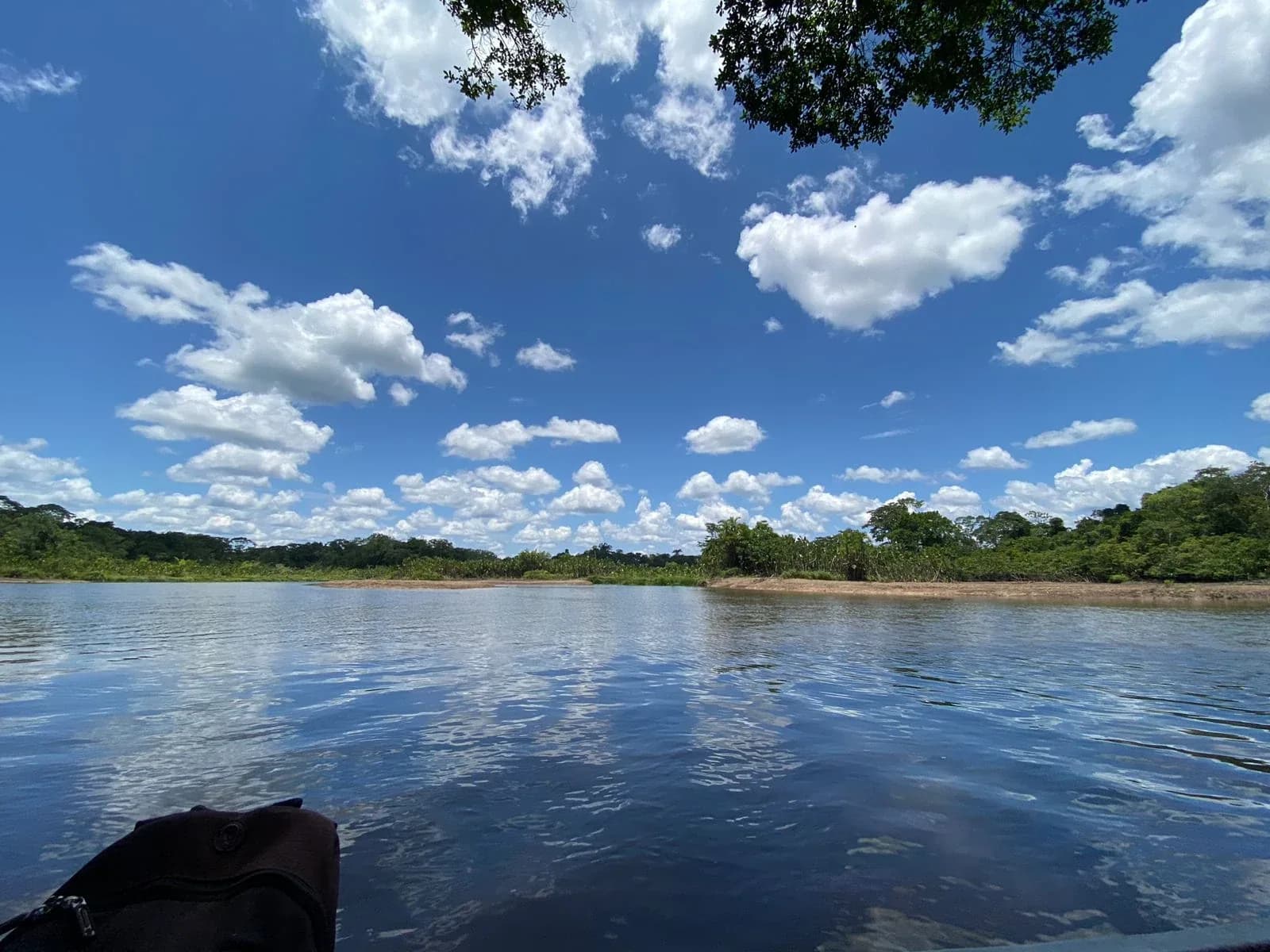
There is no bad month in the rainforest. It rains a little in all of them. What matters is the height of the water. That changes how you explore.
First-timers often ask for the "best month." The honest answer is simple. The Amazon is good all year. Each season just has a different character.
It rains in every month. That is what makes it a rainforest. The temperature barely moves. Expect warm, sticky days and cooler nights. So the real question is not rain or no rain. It is how high the water is.
High water runs from about April to July. Rivers rise. You can paddle a canoe between the trees of the flooded forest. Transfers are smooth. Some forest trails get muddy or close, so you do more by boat.
Low water runs from about August to March. Rivers drop. River beaches appear. Forest walks are easier and longer. Some shallow channels need a little pushing and wading.
Wildlife is present all year. Monkeys and birds do not take a season off.
8. How many days: example jungle trips
The length of your trip decides how much forest you see. Packages come in fixed lengths. The sweet spot is clearer than you might think.
A jungle trip is sold in fixed packages. These are usually 3, 4 or 5 days. That length does not include the travel time to the Amazon entrance town.
3 days / 2 nights. You arrive on day 1 and do afternoon activities. Day 2 is a full day of exploring. On day 3 you have an early activity. Then you head back to the entrance town.
4 days / 3 nights. This is my recommended minimum. You get 2 full days in the jungle. That is enough to find wildlife. The biodiversity of the Amazon will impress you. Browse all Amazon Rainforest tours.
5 days / 4 nights. The extra day lets you explore more of the jungle. Keen travelers and birders should choose this option.
Flights to Coca and Lago Agrio leave from Quito. So it is easy to combine the Amazon with the Andes. A classic tour pairs a visit to the equator line with the jungle.
9. What an Amazon trip costs
The jungle is sold as all-inclusive lodge packages. So budgeting is simple. Pick a comfort level. Add the flight. You are close to your total.
Jungle trips are almost always all-inclusive packages. Your guide, meals, canoe transfers and daily trips are bundled into one price. Simple riverside lodges run about USD 90-150 a day per person. Comfortable mid-range lodges cost about USD 130-300 a day. Top eco-lodges cost USD 300-600+ a day.
On top of the package, budget the flight from Quito to Coca or Lago Agrio. It costs roughly USD 120-200 round trip. Or save money with the overnight bus. A classic 4-day/3-night mid-range trip lands around USD 500-1,000 per person, plus that flight. There are no big park fees like the Galapagos. Some community reserves add a small entry fee.
(Prices vary by lodge and season. Jonatan will sanity-check current rates before you book.)
10. About the Amazon: how the rainforest works
Understanding the forest changes how you see it. The Amazon is not one flat green wall. It is a layered system. There is dry ground, flooded forest and water. And there is a whole world up in the canopy.
When you understand the forest, you stop seeing "green." You start seeing a system.
Solid ground is called terra firme in Spanish. It is the upland forest. It sits above the flood line. The trees here are the tallest. The ground is firm enough for long walks. This is where you do most of your hiking.
Flooded forest comes in 2 kinds. Varzea floods with "white water" rivers. These carry Andean mud that is rich in nutrients. Igapo floods with "black water." This carries plant leaves and is lower in nutrients. In high water, you can paddle a canoe between the trees.
Rivers and lagoons are the areas filled with water. Where the water goes still, fish, caimans and dolphins gather. Birds line the edges. These calm places are the easiest for wildlife-watching.
Above all of it is the canopy. It is the green roof, maybe 30 meters up. Most of the forest's life lives there, in the light. That is why lodges build canopy towers. They lift you up to where the action is. Get your camera ready for amazing views.
11. About the Amazon: the people
The rainforest is somebody's home. It is not an empty wilderness. Ecuador's Oriente is the land of several Indigenous nations. How you visit matters.
The best guides I know grew up here. When a Kichwa or Waorani guide reads the forest, you realize you are not in a wilderness at all - you are a guest in someone's homeland.
— Jonatan Chimarro, Ecuador Travel Expert
Ecuador's Amazon is home to several nations. The Kichwa are the largest, with many community lodges along the Napo. The Waorani live in the Yasuni. The Siona and Secoya live in Cuyabeno. The Cofan live in the northern forest. Several run or host tourism themselves.
This is more than culture on display. Community tourism gives the forest an economic value. That value helps protect it from logging and oil. In 2024, laser scans of the Upano Valley found a 2,500-year-old network of towns and roads under the trees. It proves the Amazon has been a lived-in, shaped landscape for a very long time.
Visit with respect. Ask before photographing people. Buy crafts at a fair price. And follow the lead of your host and guide.
12. Getting to the Amazon from Quito, packing and your health
The journey in is part of the adventure. A little planning makes it smooth. Here is how you get there, what to bring, and how to stay healthy.
Getting to the Amazon Rainforest from Quito
Almost every Amazon trip starts in Quito. You have 2 ways to go east. Flying takes about half an hour to a gateway town. That is Coca for Yasuni, Lago Agrio for Cuyabeno, or Macas further south. Driving takes 5 to 7 hours. But you watch the Andes fall away and the cloud forest thicken on the way down.
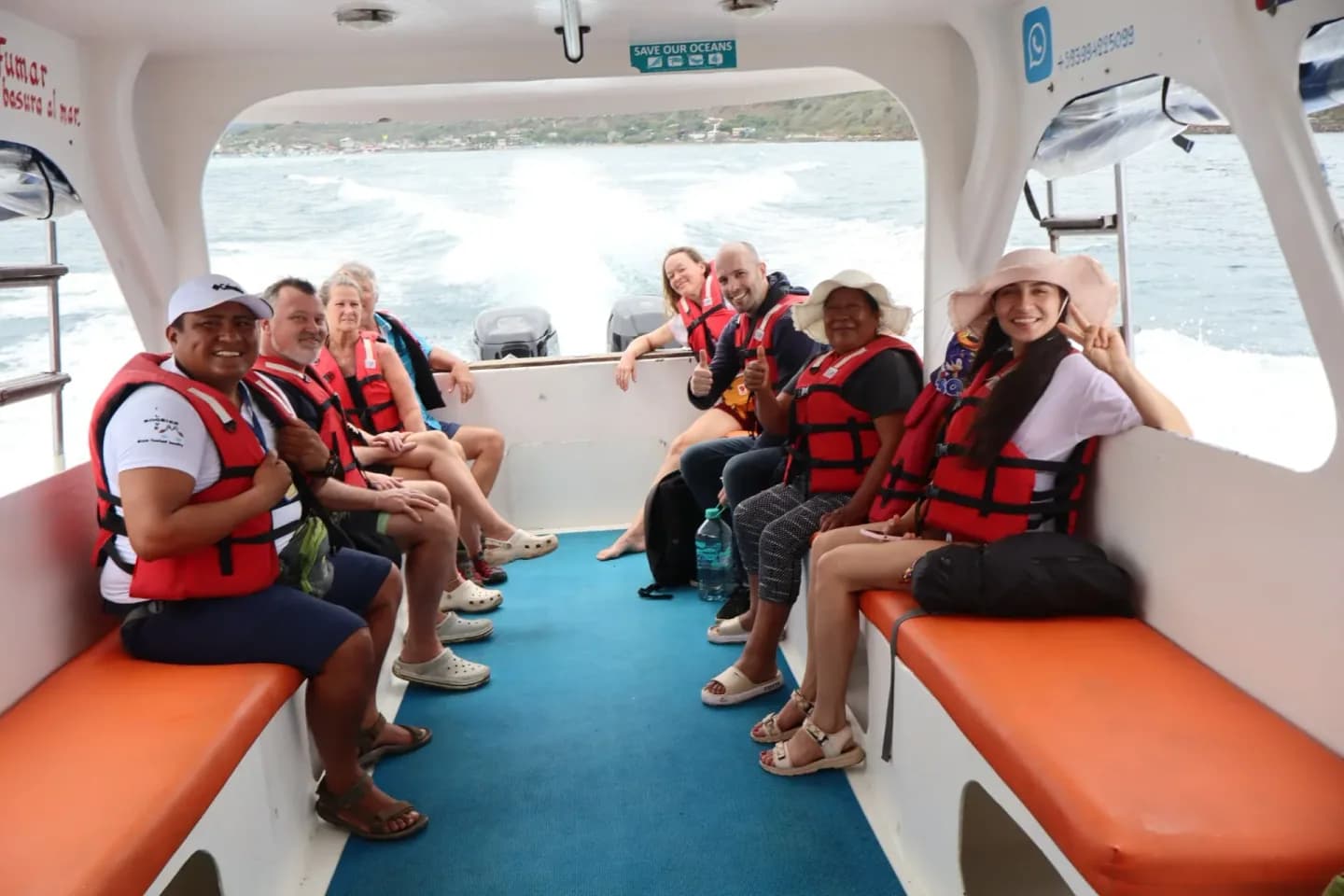
Many travelers sleep one night in the gateway town. They head in the next morning. The last leg is by motor canoe along the river. It takes 30 minutes to 3 hours. It depends on how deep your lodge sits. Pack a small day bag for the ride. Bring water, a rain layer and your camera.
What to pack for the Amazon
Pack less than you think. Heat, humidity and a small canoe punish a heavy bag. Quick-dry fabric beats cotton, which stays wet for days. Here is my short list:
- Light long-sleeved shirts and trousers: sun and insect cover in one.
- A rain jacket: it will rain; this is a rainforest.
- A hat and a refillable water bottle.
- A headlamp for night walks and early starts.
- Binoculars: the single best thing you can bring.
- Insect repellent and sunscreen.
Most lodges provide rubber boots. So check your size when you book. You do not need to bring your own. Local markets also sell them for USD 10-20. Leave heavy luggage at your Quito hotel. Many hold bags for free while you are in the jungle.
Staying healthy in the Amazon
A little planning keeps your trip about the forest, not a clinic. The CDC recommends a yellow-fever vaccine for the Ecuadorian Amazon. It also advises malaria-prevention pills for some areas. Ask your doctor. Start 4 to 6 weeks ahead. A vaccine needs time to work.
On the ground, the rules are simple. Use insect repellent with at least 20% DEET. Drink only treated or bottled water. Do not swim in still freshwater unless your guide says it is safe. Cover up at dawn and dusk, when mosquitoes are busiest. None of this is hard. But the doctor's steps take time, so book them early.
13. The big mistakes first-time visitors make (and how to avoid them)
A great trip and a poor one often come down to expectations and prep. These are the 4 slips I see most. Each one has an easy fix.
- Expecting a zoo. The forest hides its animals. Slow down and keep quiet. Let your guide's trained eyes and ears do the finding.
- Booking too short a trip. A 3-day package is mostly travel. Take 4 days / 3 nights at least. That gives you 2 full days in the forest.
- Skimping on protection. Bring insect repellent and long, light sleeves. Sort out your yellow-fever and malaria advice with a doctor well before you go.
- Overpacking. A small soft bag is plenty. The lodge lends rubber boots. And the heat makes a heavy bag feel twice as heavy.
14. Frequently asked questions about the Amazon rainforest
These are the questions first-timers ask me most before an Amazon trip.
Is there phone signal or WiFi in Amazon lodges?
Expect little to none. Treat it as a digital detox. Some lodges offer WiFi for a small fee.
Do Amazon lodges have electricity and hot water?
Often on limited or solar hours. Comfortable but rustic. It varies by lodge.
Can you accommodate dietary needs or accessibility requirements?
Yes, inform us about dietary needs or accessibility requirements at the moment you book your tour.
✍️ A personal note from Jonatan
Hello, my name is Jonatan Chimarro. I was born and raised in Quito. Throughout my life I have lived in all regions of Ecuador for shorter or longer periods of time. The beauty of the creation inspired me to enjoy life. I'm proud of our country and like to show its beauty to others. That is how I grew into a passionate tour guide.
I'm a certified tour guide, registered with Ecuador's Tourism Administration (Ministerio de Turismo). My bachelor's education taught me the importance of respect for nature and sustainable business development, and how to be a good guide with many miles of expertise under my belt.
When I'm off work, I like to study and hike. I study birding in which I'm also certified. The colors and sounds of birds are so amazing to me. Hiking long distances in the mountains or the jungle is good to maintain health and physical condition. I like to see new locations, take in new inspiration while I walk and experience encounters with wildlife. Processing my thoughts or having a good conversation along the way is living life in richness and happiness to me.
Follow my company Viaaza or follow me personally on Instagram.
— Jonatan, Quito, 2026
📚 Source list
- https://www.cia.gov/the-world-factbook/countries/ecuador/
- https://ecuador.travel/en/
- https://www.turismo.gob.ec/
- https://en.unesco.org/biosphere/lac/yasuni
- https://wwwnc.cdc.gov/travel/destinations/traveler/none/ecuador
- https://www.cdc.gov/yellow-book/hcp/environmental-hazards-risks/high-altitude-travel-and-altitude-illness.html
- https://travel.state.gov/content/travel/en/traveladvisories/traveladvisories/ecuador-travel-advisory.html
- https://www.bce.fin.ec/