
Ecuador Travel Guide 2026: Why-What-Where-When to visit

By Jonatan Chimarro ·
👋 Hello, I'm Jonatan
I'm a passionate tour guide in Ecuador and author of these blogs. I have lived and worked in all regions of Ecuador: Galapagos Islands, Amazon Rainforest, Andes Mountains and the coast. Quito is my birthplace. With over 10 years of work experience in tourism you can see me as your local expert. (Full bio at the end.)
This Ecuador travel guide is for anyone planning a tour. It is mainly for those traveling for the first time, but also if it is your third time. I write about Ecuador from what I see with my own eyes. I like to use infographics to make all the important information easy to understand. If you need more information, you are always welcome to contact me. There is also a comment section at the end of this blog.
⏱️ Ecuador in 1 minute
Ecuador is a compact country that offers 4 different worlds of biodiversity. It contains the Galapagos Islands, the Amazon Rainforest, the Andes mountains and the coast region. You can travel between all 4 regions in 1 day. It ranks number 1 in South America for UNESCO-site density, it has the equator line and uses US dollars. Here is the whole country in 5 points:
- Why go, Travel friendly country due to compact size that offers the Andes, Amazon jungle, coast and Galapagos. Ecuador is the number 1 ranked country in South America with the highest density of UNESCO-sites.
- What to do, Cruise the Galapagos, explore the Amazon rainforest, hike volcanoes, tour the Andes, watch whales on the coast and visit the equator line.
- When to go, Good all year: every region has its own season. There is always biodiversity and sunny weather present in certain parts of Ecuador throughout the year.
- Where to go, Four regions: the Galapagos Islands, the Amazon Rainforest (jungle east), the Andes (Quito, highlands and the equator line) and the coast region. Most trips start in Quito.
- What it costs, Mainland roughly USD 150–300 a day; the Galapagos USD 150–300 land-based or USD 350–1,000+ by cruise; you pay in US dollars.
1. Why travel to Ecuador?
After 10 years guiding, I hear 2 reasons: Ecuador is why people visit South America. Or once in South America, you also must visit Ecuador.
— Jonatan Chimarro, Ecuador Travel Expert
There are few places on earth where you can wake between volcanoes, stand on the equator line by lunchtime, and fall asleep to the sounds of the Amazon. That is why people travel to Ecuador. Visit 4 worlds in 1 compact country: the Galapagos Islands,Amazon Rainforest, Andes Mountains and Pacific Coast. In this Ecuador travel guide I explain you why Ecuador belongs at the top of your travel list.
Ecuador is roughly the size of the US state of Colorado⁵. You can travel between all 4 regions in 1 day. Any 3 regions are linked by flights of under three hours. Any 3 regions on the mainland can be visited by car within 6-8 hours. These travel durations are based upon my own experience.
Ecuador ranks number 1 in South America based upon density of the UNESCO awards (UNESCO World Heritage, Biosphere Reserves & Global Geoparks) in relation to the surface of the country. For every 7,300 mi² / 18,900 km² there is 1 of these UNESCO sites¹²³⁴.
Ecuador is compact, which makes it an ideal country for traveling. Peru is six times bigger. Brazil is thirty-two times bigger⁵. In Ecuador you can sleep at sea level on Monday and stand at 13,100 ft (4,000 m) on Tuesday. No long days of traveling. No internal time zones on the mainland (mainland is UTC−5, Galapagos is UTC−6)⁶. The country sits on the equator. Ecuador literally means equator in Spanish. Daylight is year-round steady at roughly 12 hours⁷.
2. What are popular travel locations in Ecuador?
Ecuador packs a remarkable number of famous places into a small country. Many are certified UNESCO sites, like the Galapagos Islands and Amazon Rainforest⁸ ⁹. This section shows which popular locations are available in each region.
These three labels, World Heritage Site, national park and biosphere reserve, are not the same thing. A UNESCO World Heritage Site is a place the whole world agrees is worth protecting, for its nature or its history⁸. A national park is land Ecuador itself sets aside and manages, mostly to protect wild nature and welcome visitors⁹. A UNESCO biosphere reserve is a living landscape where people and nature share the same space, so conservation and everyday life work side by side¹². Each label looks at something different, so one place can earn more than one. The more labels a place holds, the stronger the sign that it truly matters, for its nature, its protection and its people at once. The Galapagos carry all three, which puts them at the very top of Ecuador's protected sites.
Ecuador was first on the UNESCO World Heritage List in 1978. Galapagos for its wildlife and volcanic landscape and Quito for its best-preserved historic center in Latin America⁸. Three more sites followed: Sangay National Park (1983), for its volcano, lakes and jungle; the Historic Center of Cuenca (1999), for its rich architecture; and the Qhapaq Nan (2014), for its cultural and historical value⁸.
In addition to the World Heritage list, Ecuador has 14 national parks spanning roughly 9.6 million acres⁹. These national parks are: Galapagos, Machalilla, Cotacachi-Cayapas, Cotopaxi, Cajas, Antisana, Cayambe-Coca, Llanganates, Sangay, Podocarpus, Yacuri, Sumaco Napo-Galeras, Yasuni and Rio Negro-Sopladora.
Ecuador also holds 7 UNESCO biosphere reserves, living landscapes where nature conservation and local communities go hand in hand.¹² They safeguard some of the country's richest nature, from the Galapagos and the Amazon's Yasuni to the Choco Andino cloud forest on Quito's doorstep.
Most travelers come for the Galapagos and Quito's equator line. I show them places they've never heard of and they all say: we'll be back.
— Jonatan Chimarro, Ecuador Travel Expert
3. What are popular tourist activities in Ecuador?
There is a long list of things to do in Ecuador. Spot wildlife at Galapagos, explore Cotopaxi in the Andes and hike in the Amazon Rainforest. This section shows you which activities are available per region.
Early 2026 I hiked from Quito to Mindo: high Andes into cloud forest. Ecuador has some of the best trails, and few talk about them.
— Jonatan Chimarro, Ecuador Travel Expert
Tourist activities with an easy effort level are possible for everyone. For example, relaxing, wildlife spotting, snorkeling and hiking.
Tourist activities with a moderate effort level are possible for most people. Young children and elderly people are generally excluded. Examples of these activities are rafting, surfing and mountain biking.
The tourist activities with a hard effort level are only possible with training and support of a professional experienced tour guide. For example climbing to the summit of volcano Cotopaxi.
4. What region of Ecuador is best for you?
Each region of Ecuador feels like a different country. This section helps you decide which region is best for you. Enjoy wildlife at the Galapagos and Amazon, relax at the Pacific coast or enjoy the culture in the historic center of Quito.
Encounters with diverse exotic wildlife are possible in all regions of Ecuador. Galapagos is known for people-friendly wildlife that enables close-up encounters.
Families traveling with kids often go to the Galapagos and Coast Region. Go to the beach or play at the hotel pool.
Younger people who enjoy a vivid nightlife can enjoy Quito in the Andes and the Coast Region. Combine nightlife with day tours.
Older people are advised to travel at a slow pace. Take all the time you need to enjoy every moment. Any region will be amazing to explore.
Ready to explore by region? Browse Galapagos Islands tours, Amazon Rainforest tours, Andes Mountains tours and Coast Region tours.
5. When to visit Ecuador
Visiting Ecuador is for many people a once-in-a-lifetime activity. Knowing when to visit and enjoy the weather you prefer is therefore important. This section shows the weather month by month, so you know exactly when to visit Ecuador.
Because Ecuador sits on the equator, there is no real summer or winter. The weather of Ecuador consists of more dry or wet periods. Dry and wet periods are different per region¹³. The Andes are driest from June to September. The Galapagos has two seasons: warm/wet December–May, cool/dry from June to November¹⁴. The Coast has the whale season from June to September¹⁵. The Amazon is frequently wet all year-round with peak rains from April to July¹⁶.
Typical weather expectations:
- Quito and Andes: a typical day starts with dry sunny mornings and ends with rain in the afternoon. Always pack a layer of clothes; nights drop to around 50 °F / 10 °C because you are in the mountains.
- Galapagos warm/wet (Dec–May): calmer sea, water is warmer, around 75–79 °F / 24–26 °C. Animals are breeding.
- Galapagos cool/dry (Jun–Nov): wilder sea with stronger currents, water is cooler, around 68 °F / 20 °C.
- Amazon Rainforest: wettest peak is between April and July. Tourists visit the Amazon all year-round.
- Coast Region: sunniest period is between December and April. Whale watching is between June and September.
6. Types of accommodation to stay
Your accommodation shapes your travel experience. Ecuador offers budget solutions to expensive Galapagos cruises. This section provides an overview from simple to premium accommodations.
Campsites, as an alternative to regular hotel bookings, are not included in this infographic. These types of campsites do exist in Ecuador. These campsites are sometimes used by students. None of my customers ever traveled with a tent on an airplane to Ecuador. In case you are that unique person who proves me otherwise, feel welcome to contact me for advice on campsites.
The names of the comfort levels used on cruises for Galapagos Islands can differ per cruise company. On bigger cruises, there are always different levels in quality and prices.
7. Examples of tours for first-time travelers: 7, 10 and 14 days
How many days do you need to explore Ecuador? Many first-time travelers I guide schedule tours of 7 to 14 days. Multiple regions are combined into 1 travel schedule. In this section, you see examples of frequently used tours.
7-day Ecuador trip (Quito in the Andes + Galapagos Islands)
- Day 1–2. Quito historic center and Equator line.
- Day 3–7. Stay at a hotel in Santa Cruz. Visit other islands.
10-day Ecuador trip (Andes Mountains + Galapagos Islands)
- Day 1–2. Quito historic center and Equator line.
- Day 3–5. Cotopaxi, Quilotoa crater lake and Otavalo market.
- Day 6–10. Galapagos Santa Cruz Island.
14-day Ecuador trip (Andes, Amazon + Coast)
- Day 1–4. Quito historic center, equator line and Mindo jungle hike with bird spotting.
- Day 5–9. Amazon Rainforest.
- Day 10–14. Coast Region including a Galapagos alternative. This trip is a popular alternative to the 10-day example. It offers more days of adventure, including a "Galapagos experience" on Isla de la Plata. The car trip lets you see the country in more detail along the way, for a similar budget.
8. Wildlife: what to expect on a first trip?
Wildlife is the number-one reason many people come to Ecuador. This is for good reason, because Ecuador is one of 17 megadiverse countries on earth¹⁷. From giant tortoises in the Galapagos to monkeys in the Amazon and hummingbirds in the Andes. What is realistic to see on a first trip? This section helps you understand what to expect.
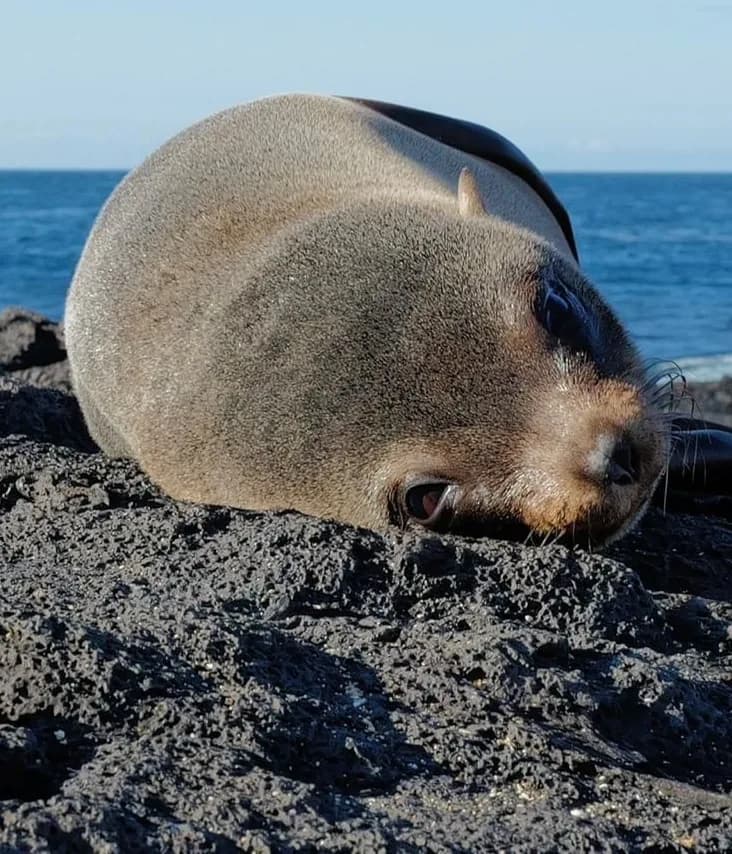
Galapagos Islands On a typical first trip in the Galapagos, you can see giant tortoises, blue-footed boobies, marine iguanas and sea lions¹⁴.
Amazon Rainforest Monkeys, parrots, pink dolphins and caimans are common in the Amazon Rainforest¹⁸. To see the pink dolphins, you have to travel deep into the Amazon. There you can see them on several locations.
Andes Mountains Hummingbirds, the Andean condor and exotic birds like the toucan are common in the Andes Mountains¹⁹. Quito and Mindo are popular places.
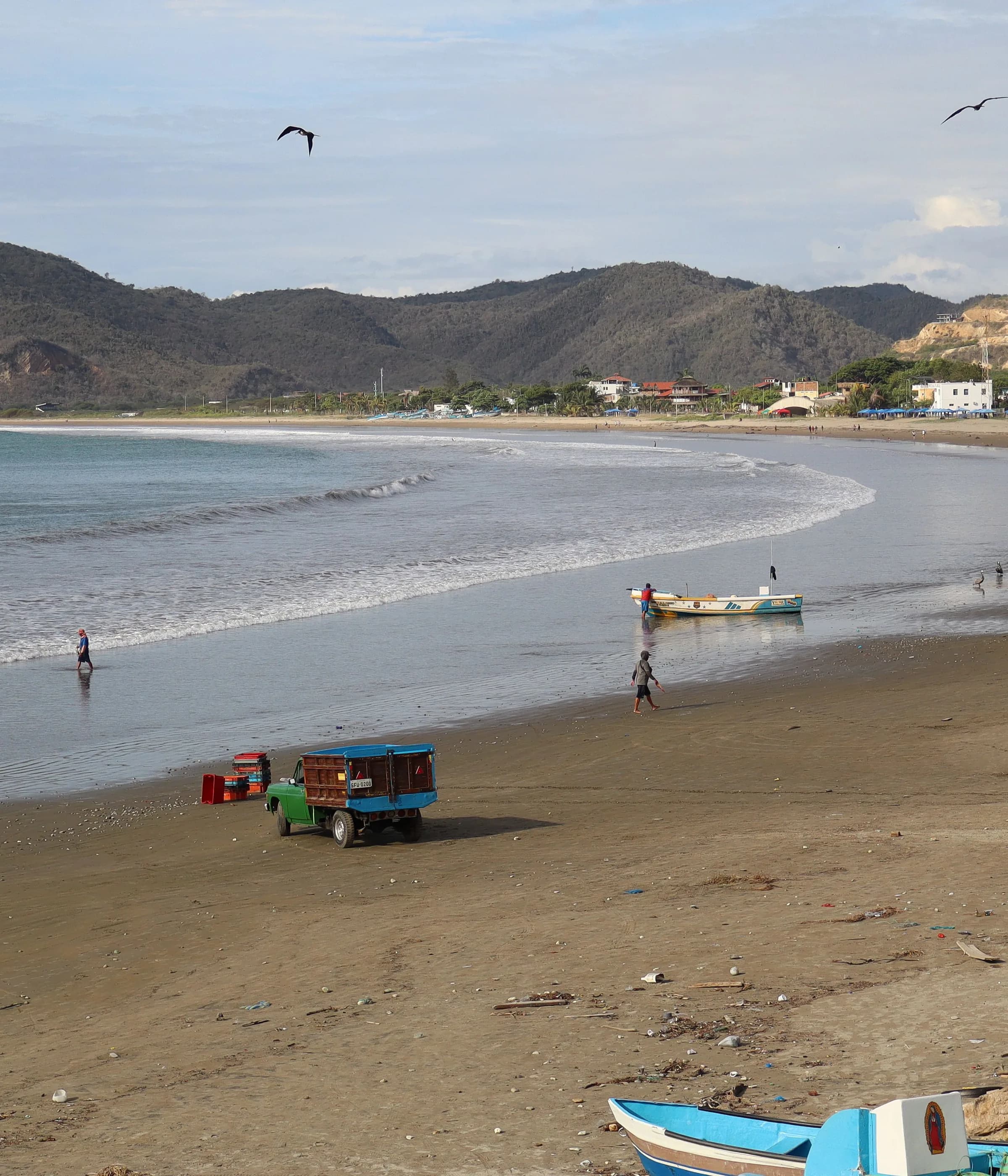
Coast Region The Coast Region contains exotic birds, monkeys, colorful fish and turtles. These are everyday animals and common to see. Puerto Lopez is a popular place to visit and follow hikes in the nearby jungle or visit Isla de la Plata.
9. About Ecuador: landscapes
Few countries change scenery as fast as Ecuador. Travel in 1 day from sea level to the top of volcano Chimborazo (farthest point from the center of the Earth). In this section you see an overview of all different landscapes based upon altitude levels.
Sea level The coast and the Amazon Rainforest are at sea level. Tropical temperatures are normal at these altitudes. Exotic wildlife like colorful parrots and monkeys live at these altitudes in the wild.
Jungle on the Andes Mountains The green jungle from the Amazon climbs up to the Andes Mountains. This jungle is called dry jungle and cloud forest. The different altitudes contribute to the massive biodiversity in Ecuador. Hummingbirds and toucans are fantastic to encounter in these regions²⁰.
Highlands High lands in the Andes have trees and green vegetation. Climate is colder. Biodiversity makes place for culture. Many indigenous communities live in these regions. Historical architecture of Quito and Cuenca is popular with tourists. Peaks of lower mountains and volcano crater lakes are ideal for hiking and panoramic pictures. For example the Quilotoa volcano crater and the hot springs from Papallacta²¹.
White peaks of eternal snow indicate the summits of high volcanoes like Cotopaxi and Chimborazo. Professional mountain climbers, accompanied by local professional guides, climb and conquer these volcanoes. Chimborazo is the highest peak in Ecuador²². Due to the bulge of our planet, this summit is the farthest from the center of the Earth. Here you are closer to the stars than anywhere else on Earth²².
10. About Ecuador: history and historical festivals
To better understand Ecuador, it helps to know its history. The Ecuadorian history impacts the culture, architecture and festivals of today. This section gives you insights into historical events that impact your travel experience in 2026.
Ecuador's history runs from pre-Inca cultures, through the Inca empire, Spanish colonial rule, independence at the Battle of Pichincha in 1822, and the switch to the US dollar in 2000. You can experience this rich history while you are traveling today. Walk on stretches of the original Inca road and visit Ingapirca, the biggest and best preserved site of Inca architecture in Ecuador²³.
The Spanish arrived in the 1530s and ruled for almost 300 years. That era left the baroque churches and tight stone streets of Quito's historic center. This well preserved historic center is now a tourist hotspot certified by UNESCO²⁴. Cuenca is also famous for its UNESCO certified historic center²⁵.
The independence of Ecuador against the Spanish regime started in Quito in 1809. Complete victory in Quito was realized in 1822. Quito therefore has monuments to celebrate this victory. The most famous are the Independence Square and Cima de la Libertad.
The United States Dollar was introduced in Ecuador in the year 2000 to replace the former currency Sucre. You can pay in USD. Daily payments are mostly in cash. Coins and banknotes up to 10 USD are common. Large banknotes can cause difficulties in providing change.
Festivals with historical roots take place throughout the year. The most famous festivals are displayed in the infographic. For people who like culture and festivals, I recommend including these in your visit to Ecuador²⁶.
11. About Ecuador: people and language
The warmth of the people of Ecuador contributes to your travel experience. It is good to understand that the society of Ecuador consists of a mix of cultures. The infographic below shows you an overview of the ethnicities and their demographics.
Most Ecuadorians are mestizo²⁷. Mestizo means mixed, because different ethnicities live in Ecuador.
Ecuador has many different cultures²⁸. The country recognizes 14 indigenous nationalities that include 18 subcultures. Each indigenous nationality has its own language, land and way of life²⁹.
There are also many Afro-Ecuadorian communities. Many of them live in the Coast Region. They have a long personal history, including their own rhythmic music³⁰.
Spanish is the main language and is spoken almost everywhere. Kichwa and other indigenous languages are spoken in the highlands and the Amazon. English is mainly used in hotels, by tour guides and in tourist hotspots, but not throughout the rest of the country³¹.
12. About Ecuador: food, markets and crafts
Ecuadorian food is regional, fresh, and delicious. Each region has its own signature dishes. This section shows what signature dish you should eat in which region.
On the Coast people eat ceviche (a cold, refreshing soup of fish or shrimp cured in citrus), encebollado and encocado (fish or shrimp in coconut sauce), plus bolon de verde (a fried green-plantain dumpling with cheese or pork) and cangrejada (a communal spiced-crab feast).
On the Galapagos Islands the year-round signature dish is grilled scorpionfish (locally called brujo). Canchalagua ceviche (an endemic sea mollusk) is also popular, and grilled spiny lobster is a local favorite too, though only in its season (September to December).
In the Andes try locro de papa (creamy potato soup), hornado (slow-roasted pork), llapingachos (cheese-stuffed potato patties) and cuy asado (roasted guinea pig, a special-occasion classic).
In the Amazon try maito (fish wrapped in bijao leaves), chontacuro (grilled palm-weevil grubs, for the adventurous) and casabe (crispy yuca flatbread).
National drinks are canelazo (hot cinnamon, sugar cane spirit), chicha (a cultural must try), and excellent local coffee³².
A few tips along the way:
- Always drink bottled or filtered water to prevent stomach problems³³.
- Don't skip the markets. Try fresh, exotic delicious fruit: guaba, taxo, naranjilla, granadilla.
- Ecuador grows some of the world's finest cacao and chocolate³⁴.
13. About Ecuador: health and safety
Is Ecuador safe? For travelers who follow simple regional advice, the answer is yes. Common sense, as in any other country, is the basic rule. This section helps you understand points of attention on health and safety per region.
The U.S. State Department travel advisory rates the country Level 2 ("Exercise Increased Caution") overall, with higher levels for specific provinces, Guayas, parts of Esmeraldas, and the Colombia-border zones³⁵. Tourist locations like Quito old town, Cuenca, Mindo, Banos, Otavalo, Puerto Lopez, Amazon, Galapagos are commonly visited without any unexpected issues. Use city common sense. Don't flash cash.
Where to take extra care:
- Guayaquil outside the central tourist zones, use Uber/Cabify, avoid walking after dark.
- Esmeraldas province, parts of the Pacific north coast, and northern border with Colombia, the State Department lists Level 4 for some sub-zones³⁵.
- ATM withdrawals at night, late taxi hails on the street (use ride-share apps).
Health basics. Safety is only half the picture. Here is the health side, kept simple:
- Take altitude slowly. Quito sits at **9,350 ft (2,850 m)**³⁶. Some travelers feel breathless or get a headache³⁷ on day one. Give yourself one easy day on arrival, drink water, and skip alcohol the first night.
- Drink bottled or filtered water³⁸ countrywide³³, even in the cities.
- Vaccinations. A yellow-fever vaccination³⁹ is recommended for the **Amazon (Oriente) below 7,546 ft (2,300 m)**³³. It is not needed for trips that stay in the Galapagos, the Andes, or the Coast. Ask your doctor about routine jabs⁴⁰ too.
- Malaria is a risk in the Amazon lowlands⁴¹. If you go, talk to your doctor about tablets before you fly.
- Dengue spreads by daytime mosquitoes in the warm lowlands. Cover up and use repellent⁴².
- The sun is strong at altitude. Bring sun cream, a hat and lip balm, even when it feels cool.
- Get travel insurance that covers medical care and evacuation. Keep a copy on your phone.
Last point of advice from my side Don't use drugs. It is bad for your health. Above all: drug-related crime in Ecuador prevents me from showing you all beautiful places around Guayaquil and the coastline.
Skipping Ecuador over a safety headline is a mistake. Be sensible, like anywhere. Travelers arrive every day and go home with lifetime memories.
— Jonatan Chimarro, Ecuador Travel Expert
14. About Ecuador: Visas, money and essentials
These practical facts make your Ecuador trip smoother. Use them to your advantage. Most first-time travelers, including US, UK, EU, Canada, Australia and Japan passport holders, enter Ecuador visa-free for up to 90 days per calendar year⁴³. The currency is the US dollar⁴⁴. Spanish is the main language. Bring small bills (USD 5, 10, 20); USD 100 bills are hard to break outside major cities. ATMs are common in cities; rare in the Amazon.
Passport. Must be valid on the day of entry⁴⁵. Ecuador does not require six months of onward validity, but airlines may still enforce six months, check with your carrier.
Currency. Ecuador adopted the US dollar in 2000⁴⁴. Local coins (centavos) circulate alongside US coins. Tipping: 10% is standard in mid- to upper-range restaurants, often already added as servicio. Round up for taxis.
Language. Spanish is universal; Kichwa and other indigenous languages are spoken in highland and Amazon communities⁴⁶. Basic Spanish helps a lot. English is reliable only inside hotels, tour operators, and Galapagos boats.
Electricity. **110V, 60 Hz, US-style plugs (Type A/B)**⁴⁷. Same as North America. UK/EU travelers: bring an adapter.
Time zone. Mainland UTC−5, Galapagos UTC−6⁶. No daylight saving.
SIM / data. Claro, Movistar, and CNT cover all cities and most tourist routes. Tourist SIMs are sold at the airport on arrival; bring your passport.
15. Packing essentials
Packing for Ecuador means packing for 4 seasons in 1 week. Use light layers of clothing. This makes you flexible for warm days on the Galapagos, cold days in the Andes and rain in the Amazon. This section shows you the essentials for packing.
A short Jonatan-tested list:
- Layered top half: short-sleeve, long-sleeve, light fleece, packable rain shell.
- Two trousers: one quick-dry, one warmer.
- Sun protection: hat for shade and sun cream 50+.
- Insect: 30%+ DEET for the Amazon; long sleeves.
- Footwear: light hikers.
- Electronics: US-plugs⁴⁷; UK/EU bring adapters that are US plug compatible.
- Documents: paper copy of passport; printed yellow-fever certificate if visiting Amazon³³.
16. The big mistakes first-time travelers make (and how to avoid them)
This section shows the common mistakes made by first-time travelers. Each mistake can be prevented. Use these tips to your advantage.
- Don't pack four regions into one week. Cut a region, or add days.
- Don't climb on day one. Sleep at altitude first. Cotopaxi (19,347 ft / 5,897 m) needs respect¹⁹.
- Don't drink the tap. Even hotel tap water, stick to bottled or filtered³³.
- Don't get sunburned. The equator sun is fierce, especially at altitude and on the water, apply sun cream every afternoon.
- Don't skip Spanish basics. Hello (hola), thank you (gracias), how much (cuanto cuesta), the bill please (la cuenta, por favor).
17. Frequently asked questions about visiting Ecuador
These are the three questions first-time travelers ask me most about Ecuador.
How do I get around Ecuador?
With tour guides of Viaaza. Domestic flights, public transport and private taxis are also an option.
Is Ecuador good for solo and solo-female travelers?
Yes, with normal city precautions. Many travelers explore independently. Do check certain regions like to coast. This region is red flagged.
Do I need travel insurance for a Viaaza tour?
It isn't included, but is is necessary for you to have your own travel insurance in order to follow our tours.
✍️ A personal note from Jonatan
Hello, my name is Jonatan Chimarro. I was born and raised in Quito. Throughout my life I have lived in all regions of Ecuador for shorter or longer periods of time. The beauty of the creation inspired me to enjoy life. I'm proud of our country and like to show its beauty to others. That is how I grew into a passionate tour guide.
I'm a certified tour guide, registered with Ecuador's Tourism Administration (Ministerio de Turismo). My bachelor's education taught me the importance of respect for nature and sustainable business development, and how to be a good guide with many miles of expertise under my belt.
When I'm off work, I like to study and hike. I study birding in which I'm also certified. The colors and sounds of birds are so amazing to me. Hiking long distances in the mountains or the jungle is good to maintain health and physical condition. I like to see new locations, take in new inspiration while I walk and experience encounters with wildlife. Processing my thoughts or having a good conversation along the way is living life in richness and happiness to me.
Follow my company Viaaza or follow me personally on Instagram.
Jonatan, Quito, 2026
🔗 Internal links
- Galapagos Islands Travel Guide 2026
- Coast Region Travel Guide 2026
- Andes Mountains Travel Guide 2026
- Amazon Rainforest Travel Guide 2026
📚 Source list
- https://whc.unesco.org/en/list/
- https://www.unesco.org/en/mab
- https://www.unesco.org/en/iggp/geoparks
- https://www.cia.gov/the-world-factbook/field/area/
- https://www.cia.gov/the-world-factbook/countries/ecuador/
- https://www.cia.gov/the-world-factbook/countries/ecuador/
- https://www.cia.gov/the-world-factbook/countries/ecuador/
- https://ecuador.travel/en/ecuador-and-its-world-heritage-sites/
- https://www.ambiente.gob.ec/14-parques-nacionales-simbolo-de-conservacion-de-los-ecosistemas-del-pais/
- https://www.ambiente.gob.ec/14-parques-nacionales-simbolo-de-conservacion-de-los-ecosistemas-del-pais/
- https://ecuador.travel/en/ecuador-and-its-world-heritage-sites/
- https://www.unesco.org/en/node/181171
- https://ecuador.travel/en/about-ecuador/
- https://www.galapagos.gob.ec/
- https://ecuador.travel/en/
- https://www.turismo.gob.ec/
- https://www.biodiversitya-z.org/areas/24
- https://journals.plos.org/plosone/article?id=10.1371/journal.pone.0008767
- https://ecuador.travel/en/
- https://ecuador.travel/en/destinations/andes/mindo
- https://whc.unesco.org/en/list/260/
- https://ecuador.travel/conoce-7-cumbres-ecuatorianas-para-vivir-aventuras-de-altura/
- https://ecuador.travel/en/ecuador-and-its-world-heritage-sites/
- https://whc.unesco.org/en/list/2/
- https://whc.unesco.org/en/list/863/
- https://ecuador.travel/fiestas-y-rituales-en-ecuador-un-pais-de-cultura/
- https://www.ecuadorencifras.gob.ec/documentos/web-inec/Bibliotecas/Estudios/Estudios_Socio-demograficos/Poblacion_Indigena_del_Ecuador.pdf
- https://ecuador.travel/en/culture/
- https://ecuador.travel/pueblos-y-nacionalidades-del-ecuador/
- https://www.turismo.gob.ec/descubre-la-riqueza-patrimonial-cultural-de-ecuador/
- https://www.cia.gov/the-world-factbook/field/languages/
- https://ecuador.travel/en/
- https://wwwnc.cdc.gov/travel/destinations/traveler/none/ecuador
- https://produccion.gob.ec/
- https://travel.state.gov/content/travel/en/traveladvisories/traveladvisories/ecuador-travel-advisory.html
- https://wwwnc.cdc.gov/travel/destinations/traveler/none/ecuador
- https://wwwnc.cdc.gov/travel/destinations/traveler/none/ecuador
- https://wwwnc.cdc.gov/travel/destinations/traveler/none/ecuador
- https://wwwnc.cdc.gov/travel/destinations/traveler/none/ecuador
- https://wwwnc.cdc.gov/travel/destinations/traveler/none/ecuador
- https://wwwnc.cdc.gov/travel/destinations/traveler/none/ecuador
- https://wwwnc.cdc.gov/travel/destinations/traveler/none/ecuador
- https://travel.state.gov/content/travel/en/international-travel/International-Travel-Country-Information-Pages/Ecuador.html
- https://www.bce.fin.ec/
- https://travel.state.gov/content/travel/en/international-travel/International-Travel-Country-Information-Pages/Ecuador.html
- https://www.cia.gov/the-world-factbook/countries/ecuador/
- https://ecuador.travel/en/